
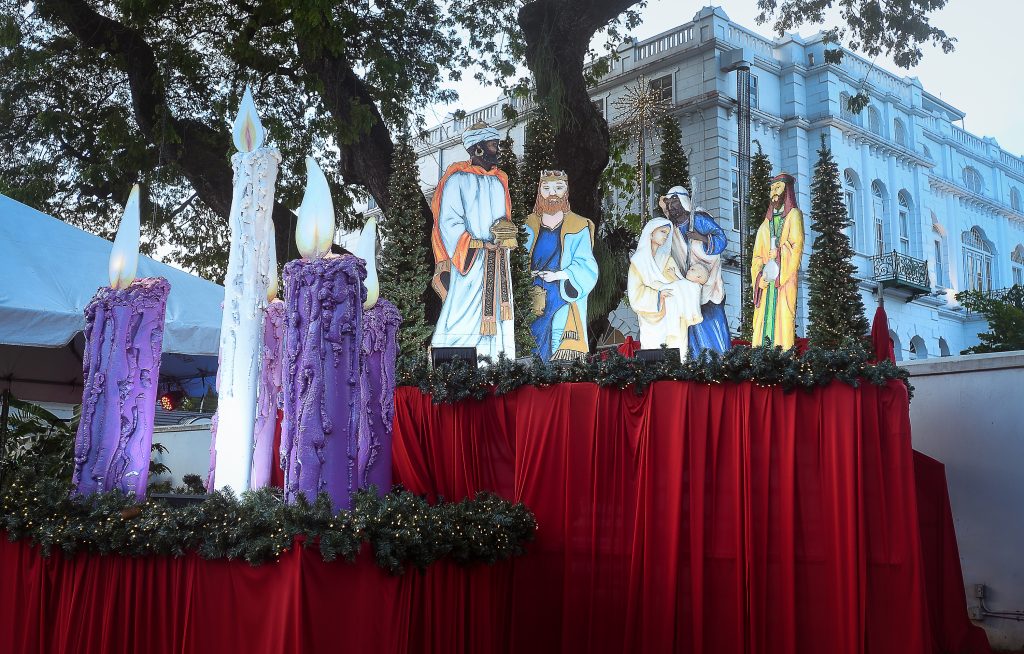
Q: Archbishop J, how do we celebrate Christmas in this guava season?
“And the Word became flesh and dwelt among us” (Jn 1:14)
It is a question I have heard often this year—sometimes spoken aloud, sometimes asked silently in worried hearts.
At Christmas, we proclaim something so familiar that we risk no longer hearing how radical it truly is: God became flesh and dwelt among us. Not as an idea. Not as a philosophy. Not as a distant spiritual presence. God came among us as a vulnerable child, born into poverty, uncertainty, and danger.
This is not a sentimental story meant to make us feel warm once a year. It is a daring divine decision.
God made a radical commitment to us—frail, fearful, and often unsure of ourselves. God believed in us even when we struggled to believe in ourselves. “God so loved the world that he gave his only begotten Son, so that whoever believes in him may not be lost, but may have eternal life” (Jn 3:16).
That gift did not come wrapped in comfort or security. It came wrapped in swaddling clothing—the covering of the poor.
Christmas in a guava season
This Christmas finds Trinidad and Tobago in what many of us would call a ‘guava season’—a time when there is little in the cupboard and fruit becomes the staple just to get by. It is a season when many go hungry, when what once felt stable now feels fragile.
For many families, Christmas brings anxiety rather than anticipation. Parents worry about empty cupboards, about children waking up to no gifts, about the absence of ham or turkey, pastelles, ponche de crème, or sorrel on the table. For many households this year, that is the painful reality.
This is why, more than ever, solidarity is not optional. It is essential.
At the same time, our nation and our region live under the shadow of unsettling geopolitics. Warships in nearby waters, global tensions between powerful nations, economic pressures far beyond our control—these realities weigh heavily on small countries like ours. The Caribbean has long cherished its identity as a ‘zone of peace’, yet many now feel that peace itself is fragile.
Into this moment—this time of economic uncertainty, social strain, and geopolitical anxiety—Christ is born. Not despite the darkness. But precisely into it.
Glory to God in the Highest
Saint Luke tells us that the birth of Jesus was accompanied by a vision that astonished the shepherds: “Suddenly there was with the angel a multitude of the heavenly host, praising God and saying, ‘Glory to God in the highest, and on earth peace to people of good will’,” (2:13, 14).
This song reveals the meaning of Christmas in two simple but demanding movements. The first is Glory to God in the highest.
MY FIRST CHRISTMAS WISH for the people of Trinidad and Tobago is this: that we would once again order our lives—for ourselves, our families, our parishes, and our nation—for the glory of God.
To give glory to God is not about pious words or religious appearances. It is about how we live. It means allowing God to shape our priorities, our decisions, our public life, and our private conduct.
It means taking the teachings of Jesus seriously—especially when they challenge our habits, our prejudices, and our comfort.
Giving glory to God means striving to live as Jesus taught us: to love God with all our heart, soul, mind, and strength; to love our neighbour as ourselves; to forgive as we have been forgiven; to seek justice, love mercy, and walk humbly with God.
It also means listening to the Advocate, the Holy Spirit whom Jesus left us—not as a decoration of faith, but as the living guide of the Church and the quiet voice of conscience within each believer.
When we truly order our lives for the greater glory of God, something beautiful happens. God’s will and our deepest human desire begin to come together. What God desires for us becomes what we desire for ourselves. This is not the loss of freedom; it is its fulfilment. This is the first meaning of Christmas.
And on Earth, Peace
The second movement of the angels’ song is peace on earth to people of good will.
Peace is one of the most misunderstood words in our vocabulary. Peace is not simply the absence of war, nor is it just the silence of guns. Peace is something we must build, patiently and persistently, day by day.
Peace begins in the heart. It requires the courage to confront pride, to restrain the tongue, to choose words that heal rather than wound. It grows in families when we refuse to let anger have the last word, when forgiveness becomes stronger than resentment.
Peace is strengthened in communities when we look out for the most vulnerable, when we refuse to normalise violence, when we insist that dignity—not fear—must govern our relationships.
Peace must also be built structurally. It depends on just institutions, honest leadership, opportunities for young people, care for the poor, and non-violent ways of resolving conflict. Peace cannot survive where injustice is allowed to fester. This Christmas, as global tensions rise and local anxieties deepen, we must resist the temptation to retreat into cynicism or despair. Peace is not naïve. It is disciplined hope. It is the daily work of choosing dialogue over division, solidarity over selfishness, and courage over fear.
MY SECOND CHRISTMAS WISH for Trinidad and Tobago is this: that we would work tirelessly to build peace—in our hearts, our homes, our parishes, our communities, and our nation.
The gift we must give
The Christ Child is God’s greatest gift to humanity. But Christmas also asks something of us in return.
The gift we must give to our beloved Trinidad and Tobago is a renewed commitment to her transformation—not someday, but every day of our lives.
This commitment takes flesh when we share with those who do not have: when we support those who work with the poor; when we refuse indifference; when we love not only in words, but in concrete action.
When we love God with all that we are and love our neighbour in the rebuilding of our nation, we will find the way to peace.
This Christmas, in the midst of a guava season, let us remember: God did not abandon the world when it was fragile. God entered it.
May the Child of Bethlehem give us the courage to glorify God with our lives, and the grace to become artisans of peace.
And may Trinidad and Tobago, held in God’s loving gaze, discover anew the hope that is born when heaven touches earth. Merry Christmas.
Key Message:
Even in a guava season marked by hardship and anxiety, Christmas calls Trinidad and Tobago to rediscover hope by giving glory to God through the way we live and by actively building peace through solidarity, justice, and love of neighbour.
Action Step:
If we have, let us give generously to those who do not have. Invite someone for lunch; give to those who care for the poor. Build peace wherever you can.
Scripture for Reflection:
Isaiah 9:2–6