
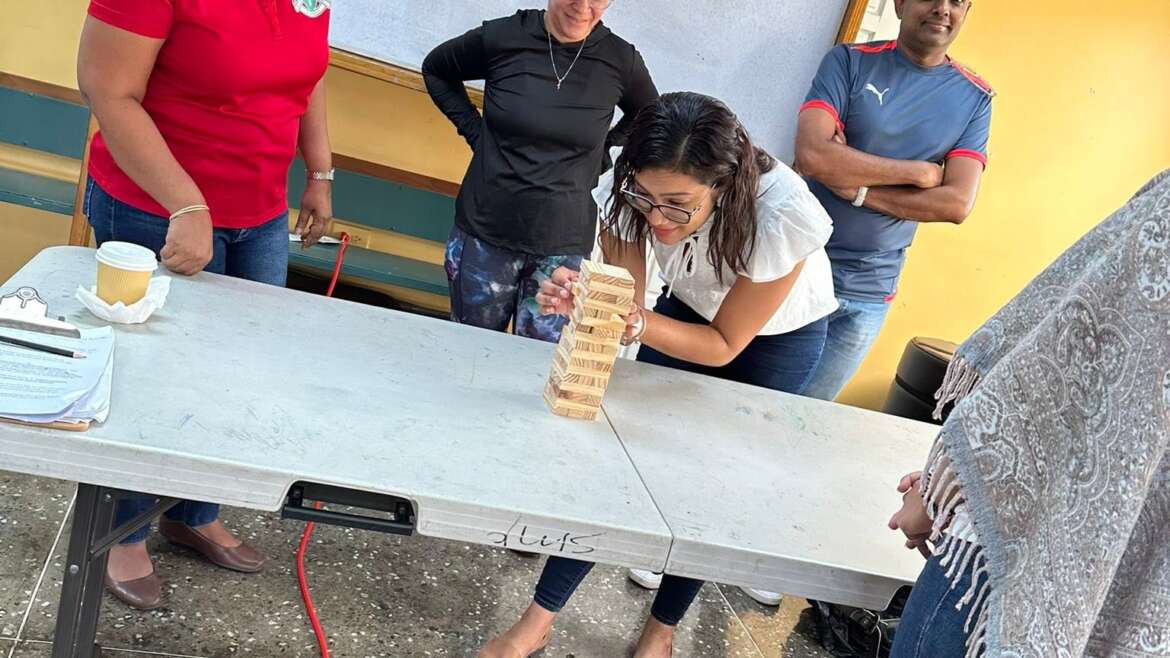
When parents and educators gathered for the final session of ‘Shared Saturdays’ at St Monica’s Prep School, the conversation centred on a single, transformative idea: empathy is not simply something we feel—it is something we do, and something rooted deeply in our faith.‘Shared Saturdays’ is a space for parents and teachers to learn, play and pray together. There were four sessions: May 9 and 23, and June 13 and 27. The Archdiocesan Family Life Commission (AFLC) facilitated all sessions–Understanding Yourself, Stages of Development, and The Importance of Empathy, modules in the Children are Gift parent accompaniment initiative.
Catholic teaching reminds us that every person is made in the image and likeness of God. To truly see another person—especially a child—is to recognise God’s presence in them. As one participant put it during the session, empathy is an active response that involves connecting with others, not a passing emotion to be observed from afar.
This understanding echoes Scripture itself: “We love because He first loved us” (1 Jn 4:19). Jesus modelled this kind of empathy throughout His ministry—stopping, noticing, and genuinely entering into the pain of those around Him.
As one attendee reflected, God is love, and the love He has given us is meant to be shared through greater empathy.
To help parents and teachers put this faith-filled understanding into daily practice, the session introduced a practical framework: the 4 A’s of Empathy.
Awareness—”I notice.” The starting point of empathy is recognising that someone is feeling something. For younger children, this might mean helping them name emotions with simple phrases like “You seem angry” or “Are you feeling sad?” Just as Jesus paused to notice the suffering around Him, parents are called to slow down and truly see their children.
Attunement—”I feel with you.” This is the heart of empathy—not fixing but being present. Children need to feel heard and understood, and when caregivers model this kind of listening, children learn to extend the same gift to others. As one participant noted, listening begins with empathy, and it’s okay to feel. Another shared a personal resolution: “I need to be more in tune with a child who needs me to listen.”
Acceptance—”Your feelings are okay.” Validating a child’s emotions, without judgment, teaches them that all feelings are allowed, even if not all behaviours are. This mirrors God’s own unconditional welcome: “Come to me, all you who are weary” (Matt 11:28).
Action—”I will do something.” Empathy that doesn’t move us into action remains incomplete. Whether through a hug, a kind word, or simply staying close, small acts of compassion ripple outward. As one attendee observed, even the smallest gestures are seeds of compassion that grow into a more caring world.
The session’s lessons extended beyond the parent-child relationship to communication across different groups—reminding participants that empathy is a bridge in every relationship—from classroom to workplace to parish community. One core practice resonated throughout: active listening before responding, not reacting. This call to grace was perhaps best summarised by a participant who reflected that we are all going through something and deserve kindness, understanding and grace—concluding simply, “Be kind always.” As AFLC continues forming families in faith, in the words of one participant, the path forward is simple: listen, notice, accept, and act—for in doing so, we love as we have first been loved.
For more information on, or to host AFLC’s Children are Gift parenting accompaniment initiative, please email us at familylife@catholictt.org