
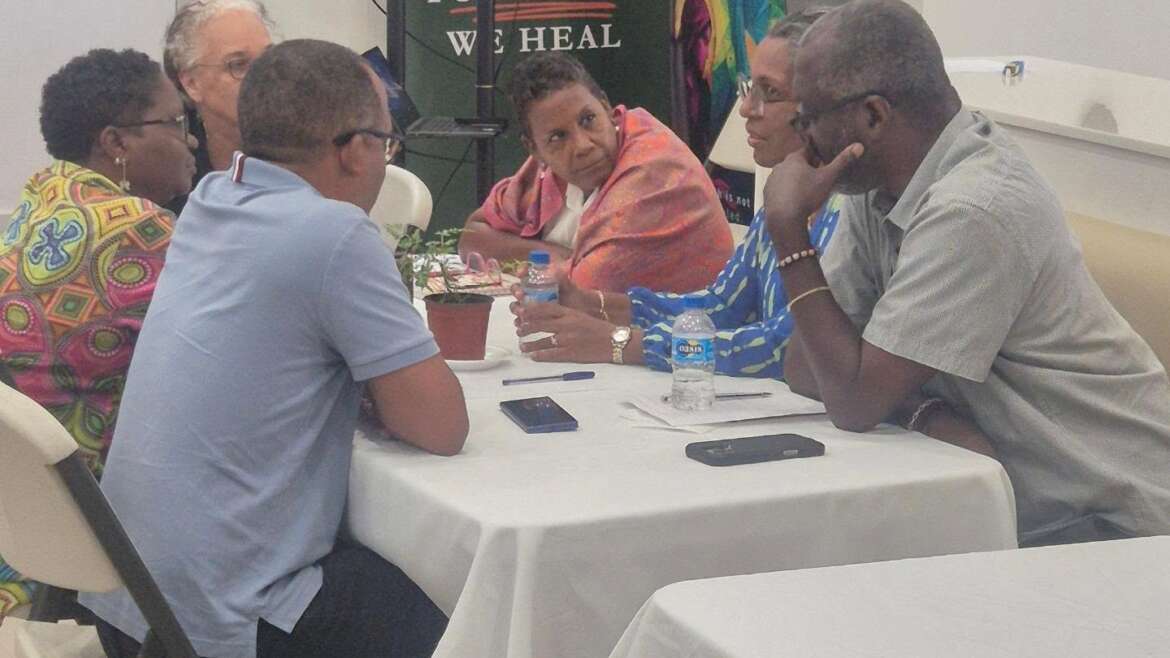
Pastoral leaders gather to discern the way forward after Amoris Laetitia
Ten years after Amoris Laetitia, the Church has a new vocabulary. Words like accompaniment, discernment and the inclusion of all families now shape ministry in ways that were hard to imagine a decade ago. It was a reset of culture, not only of language.
It was in that spirit that Archbishop Jason Gordon invited those involved in the pastoral care of marriage and the family to come together on November 10 at Belmont Pastoral Campus hosted by the Archdiocesan Family Life Commission (AFLC). His concern was plain. At the recent family summit in Rome, the conversation on youth and the vocation of marriage named a sobering trend: marriage as a Sacrament as an option is steadily declining. “We have not prayed, proclaimed and lived the vocation well,” participants heard. And the pointed question: who is fighting for marriage today? Sociological and theological factors have shifted, and the culture of late Western capitalism has quietly replaced God with lifestyle, money and pleasure. The call, participants said, is to conversion.
The following marriage and family stakeholders were represented, Joy Filled Marriage preparation (JFM), Catholic Engaged Encounter (CEE), AFLC’s Parenting accompaniment ministry, Teams of Our Lady, Marriage Encounter, Couples for Christ, Retrouvaille, Skills for Sacramental Marriage Building, Original Pain Therapy, Billings Ovulation Method Association, Ministry to the Separated, Divorced and Widowed, representative from AFLC’s Mental Health Team, Bethesda for families with disabilities and representatives from family life units (FLUs),
The diagnosis was honest. “We are failing to prepare,” one voice noted. “It’s not the Huxtables.” Another reminded the room that “it’s nice to stick in your corner,” but what is needed is an ecosystem of ministries working together, and young people who can learn to delay gratification.
Yet the gathering was no lament. Participants identified clear needs: couples accompanying couples especially in the first ten years of marriage, ongoing dedicated ministry to accompany married couples, and earlier formation to walk with young people, finding “a better way to plant.” Confirmation was named as a ripe opportunity, a chance to accompany whole families, since many parents of confirmands are not practicing the faith.
Two risks were named without flinching. The first is succession: people hesitate to take responsibility in the Church. The second is tiredness, which breeds anxiety and resentment. The remedy offered was the heart of the new reset: we are all broken and in need of God’s mercy. As Romans reminds us, all have fallen short of God’s glory, and Jesus Christ is the one inviting us.
Hence the greatest note of hope. Families are not merely recipients of ministry but its subjects, domestic churches becoming missionary disciples who reach out to other families.
When asked to name the graces of the day, participants spoke of relief, synergy, communion, gratitude and being seen. Many simply said hope. As one put it, “I am not alone in wanting more.”
The way forward will take patience and a willingness to stay the course, but the room left with a shared conviction: the answer is there, and it will come with time, together.
Ten years after Amoris Laetitia: proclaiming the Gospel with families today was held in Rome on 7-14 October 2026. It was a meeting of the Holy Father Leo XIV with the Heads of Eastern Churches and the Presidents of Episcopal Conferences
A week of mutual listening, synodal discernment and dialogue on the steps to be taken in order to proclaim the Gospel to families today, in light of Amoris Laetitia and taking into account what is currently being done in the local Churches.
Archbishop Jason Gordon, President of the AEC and Bishop Robert Llanos, Chair of the Laity and Family Commission represented the Antilles Episcopal Conference.