
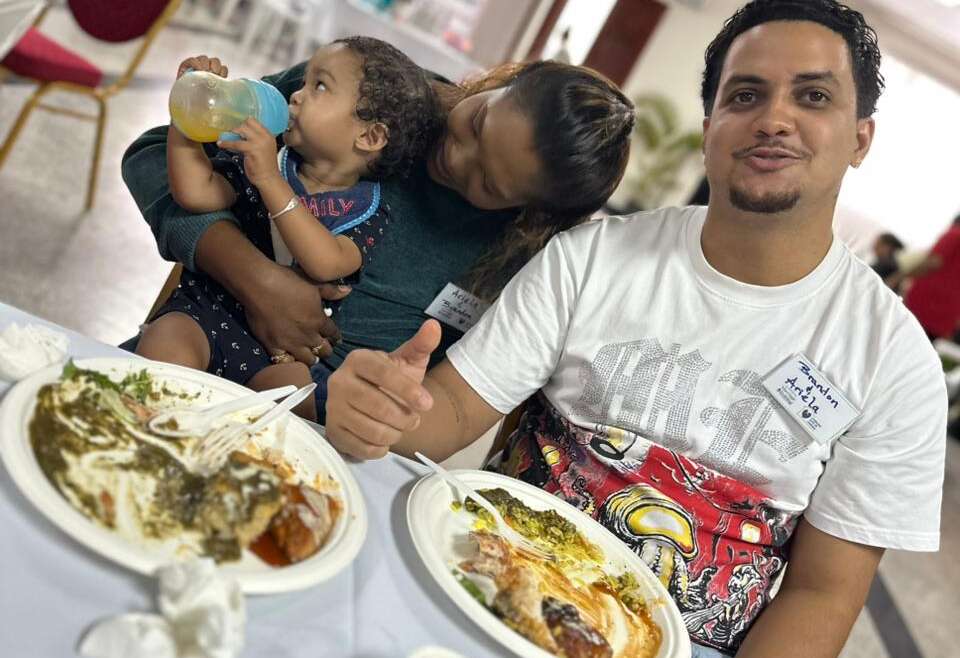
We almost always begin in the same place. We meet someone, something comes alive, and we are convinced—rightly—that we have fallen in love. The wedding is radiant; the vocation is named and embraced.
But then the honeymoon ends, the suitcases are unpacked, and ordinary life resumes. Here, quietly, something different begins. The home we have just built turns out to be a school—a school of love and communion—and its first lesson is one no one warns us about: we are invited to die to ourselves, every single day, in ten thousand ways.
The end of marriage is a saint
The Church has always taught that the deepest end of marriage is the sanctification of the spouses: that each becomes a saint. But this sanctification does not arrive the way it does in the cloister. It comes through the daily choice of two people who, under one roof, decide to die to self and put the other first.
St John Paul II gave families a command that was really an invitation: “Family, become what you are.” The family, he said, is called “to guard, reveal and communicate love.” That is not a slogan but a labour, forged one small surrender at a time.
Pope Francis says, “the joy of love experienced by families is also the joy of the Church.” But that joy is not feeling preserved under glass; it is cultivated and fought; he calls a love “reborn, renewed and reinvented until death.”
The ego battle or the Paschal Mystery
Here is the fork in the road. If discipleship is not at the forefront, not the conscious desire of both, marriage quickly becomes an ego battle. Who wins? Who loses? The modern mind is trained to compete, so we compete over nothing: who squeezes the toothpaste from the top and who from the bottom, who hangs the toilet roll which way. Weightless things.
Yet we invest them with enormous stock, and a year in, two people who love each other are quietly scarred by battles over what never mattered.
St Paul offers the other way. We misread Ephesians 5:21 ff as setting the husband over the wife, or the wife over the husband. Read it again. It calls husbands and wives to give themselves over to the Lord. Both are called to submit to Christ.
He sets the agenda; both must bend their hearts to His will. Once that is understood, every disagreement stops being a contest and becomes a chance to discern God’s will, placing it before my will and my spouse’s. This is the Paschal Mystery walking into the kitchen, the bedroom, the nursery.
The Descent of the Kerygma
The kerygma, the core proclamation of our faith, has a shape. Christ was born of a woman, worked many wonders, was put to death, and was raised by the Father. He ascended into Heaven, sending us out to make disciples, pouring out the Holy Spirit to empower us to love, and He will come again to judge the living and the dead.
But this kerygma begins in us merely as thoughts—true, even cherished, yet living only on the surface. The genius of family life is that it will not let the kerygma stay there. Every time I face the choice between dying to myself and creating friction, I am offered the chance to carry that proclamation down to a deeper stratum of who I am. What feels like death to the ego is a rising into discipleship.
The six strata Paul VI named
This is where Evangelii Nuntiandi becomes the engine. Paul VI insisted that evangelisation is never only a matter of wider territories or greater numbers; it means carrying the Good News into “all the strata of humanity” and transforming us from within. He named six strata the Gospel must reach and, to use his word, “upset”. And no school conveys these six as relentlessly as the family.
It must first reach our criteria of judgement, the standards by which we decide who is right. In the ego battle, my only criterion is winning. The kerygma establishes another—not “who is right” but “what is the will of God here”? Every surrendered argument drives it deeper.
It must reach our determining values, what we treasure. The couple who war over the toothpaste have let weightless preferences harden into governing values. Dying to self lets the Gospel re-rank what we hold dear, until the other’s peace matters more than being proven right.
It must reach our points of interest, the things that hold our attention. Self looks inward—my comfort, my grievance, my need. The Gospel turns the gaze outward, so I notice my spouse’s exhaustion before my own, the child’s fear before my irritation.
It must reach our lines of thought, the inherited grooves of our reasoning. We were each parented one way, and we argue out of those grooves without knowing it. When two inherited logics collide over raising a child, the kerygma is invited down into our patterns of thinking, to heal and reorder them.
It must reach our sources of inspiration—what we draw strength from. A marriage running on romance alone stalls when romance tires. The Gospel becomes the deeper spring, so that when a job is lost, or illness comes, the couple draws not on feeling but on the risen Christ.
And it must reach our models of life, the patterns we imitate and hand on. Little by little, the family stops copying the scorekeeping world and begins to model Christ’s self-giving.
Here, Paul VI’s vision finds its fulfilment: a family transformed at these six depths cannot keep the change to itself. The Gospel that has gone right to its roots overflows—to other families, the parish, the school, the village. This is how a domestic Church evangelises: not by argument, but by overflow.
A thousand resurrections
This is why the hard seasons matter most. The lost job, the long illness, the terminal diagnosis of a parent—these are not interruptions of the school of love but its deepest classrooms.
There, a living faith must rise simply to stand beside one’s spouse; there the question stops being who wins the argument and becomes what the will of God in this is; and there, in the little death, we believe the Resurrection even more.
Pope Francis reminds us that a family’s crises are “part of its dramatic beauty,” and that surviving them can “improve, settle and mature the wine” of a marriage. So with Job I can say, “I know that my Redeemer lives,” and with St Paul pray, “I want to know Christ and the power of his resurrection.”
Every small dynamic of family life is ultimately one of two things: a wounding ego battle, or one more chance to let the kerygma descend through the six strata—and make our home a school of love the whole village can feel.
Key Message:
Marriage and family life are a school of love whose purpose is the sanctification of the spouses. We are sanctified not in grand gestures but through ten thousand daily invitations to die to self, and each little death drives the kerygma deeper into the six strata Paul VI named: our criteria of judgment, values, interests, thoughts, inspirations, and models of life. When the Gospel reaches those depths, it overflows from the family into the whole community.
Action Step:
The next time a disagreement arises at home, even over something trivial, pause before responding and ask one question: What is the will of God for me here? Let that pause be your dying to self today, and watch the Paschal Mystery do its quiet work.
Scripture for Reflection:
“I want to know Christ and the power of his resurrection and the sharing of his sufferings by becoming like him in his death” (Philippians 3:10).